
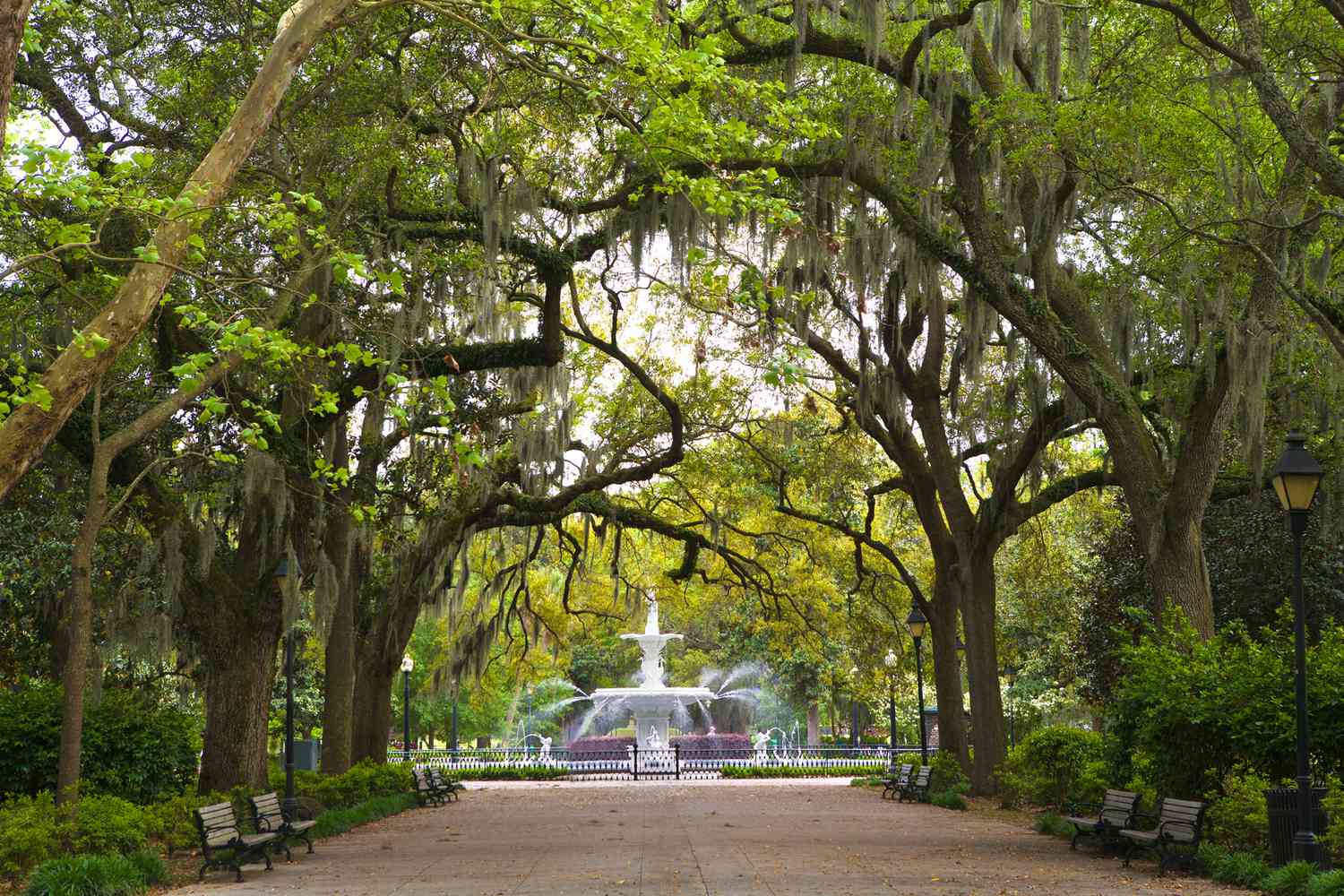
Start at Forsyth Park
Forsyth Park is the green heart of Savannah, and it’s the perfect place to begin your summer itinerary. The 30-acre expanse is defined by its massive, moss-draped live oaks that create a natural canopy over the walking paths. In the center, the white iron fountain stands as a photogenic landmark, surrounded by wide lawns where locals gather to escape the midday sun. This is the quintessential Savannah vibe: slow, shaded, and deeply rooted in history.

The park offers a stark contrast to the brick-lined streets of the historic district. While the squares are charming, Forsyth Park provides open space and significant shade cover, which is essential for managing the heat during a summer visit. The trees here are old enough to have witnessed centuries of change, offering a cool respite from the humid Georgia air.
To make the most of your time here, arrive early in the morning or later in the afternoon. The midday sun can be intense, and the lack of shade in some open lawn areas makes those hours less comfortable. Bring water and wear light clothing, but don’t rush. This is a place for lingering, watching the light filter through the Spanish moss, and letting the pace of the city settle into your rhythm before moving on to the next stop.
Walk the Historic District Squares
Savannah’s Historic District is a grid of 22 squares, each framed by live oaks draped in Spanish moss. Walking between them is the city’s primary summer ritual, but the heat demands strategy. The goal is to move quickly through the sun-drenched streets and linger in the shaded pockets of the squares, treating each green space as a natural air-conditioned refuge.
Start your route early, before the pavement radiates intense heat. Begin at Chippewa Square, home to the famous Forrest Gump bench, and move north toward Johnson Square. These initial stops are iconic, but the real magic happens in the smaller, less crowded squares like Mercer Williams or Madison. Here, the canopy is denser, and the temperature drops noticeably under the ancient banyan trees.
Carry water and wear light, breathable clothing. The distance between squares is short, but the humidity makes every step count. Use the squares as rest stops: sit on a bench, read a plaque, and let the breeze from the nearby River Street or the open park air cool you down. Avoid midday sun exposure by keeping your pace brisk between shaded areas.
The architectural beauty of the district—from the Gothic Revival of the Cathedral of St. John the Baptist to the Greek Revival of the Telfair Museums—is best appreciated when you aren’t fighting the heat. By respecting the rhythm of the shade and the sun, you turn a simple walk into a comfortable, immersive experience.
Escape to Wormsloe and Bonaventure
Savannah’s reputation for atmospheric beauty rests on its ancient live oaks draped in Spanish moss. These sites offer the quintessential Southern aesthetic, but they also present a challenge: summer heat. The shade canopy is dense, yet the humidity remains high. To enjoy these locations without exhaustion, timing and preparation are essential. Both Wormsloe State Historic Site and Bonaventure Cemetery provide cool, shaded pathways that feel worlds away from the city center.
Wormsloe offers a mile-long oak-lined drive leading to colonial ruins and a nature trail system. The entrance fee is minimal, and the shade allows for longer walks than you might expect in July. Arrive early, before 9 a.m., to beat both the sun and the tour buses. The historic plantation house and the fortifications provide context, but the moss-draped avenue is the main draw. It is a quiet, immersive experience that defines Savannah’s visual identity.
Bonaventure Cemetery is often cited as one of the most beautiful cemeteries in the world. The interplay of light and shadow through the moss creates a serene, almost ethereal atmosphere. While it is a place of rest, it is also a popular spot for photography and quiet reflection. The grounds are flat and well-maintained, making them accessible, but the summer heat can be intense if you linger too long. Visit at dusk when the temperature drops and the light softens.
| Feature | Wormsloe State Historic Site | Bonaventure Cemetery |
|---|---|---|
| Cost | $5 per person | Free |
| Best Time | Before 9 a.m. | Dusk (sunset) |
| Shade Level | High (oak avenue) | High (dense canopy) |
| Crowds | Moderate (bus tours) | Low to Moderate |
Both locations require you to manage your exposure to the elements. Bring water, wear light clothing, and use sunscreen. The visual payoff is significant, but comfort depends on respecting the summer climate. These sites are not just photo opportunities; they are historical and natural landscapes that demand a slower pace. Plan your visit around the heat, not the other way around.
Visit Nearby Beaches and Islands
Savannah’s historic district is a magnet, but the real summer escape lies just twenty minutes east. Tybee Island and Skidaway Island offer a distinct change of pace, trading moss-draped oaks for salt air and wide sandy shores. These coastal spots are essential for cooling off, though the summer heat demands a strategic approach to your itinerary.
Tybee Island: The Classic Coastal Escape
Tybee Island is the most accessible beach destination from downtown Savannah, connected by the Tybee Bridge. It offers a lively boardwalk, the historic Fort Pulaski National Monument, and several public beach access points. The atmosphere here is more energetic than Skidaway, with plenty of restaurants and shops lining Strand Street.
Callout: Book Tybee Island parking early in summer; lots fill by 10 AM.
Arrive before midday to secure parking near the beach access points on Ocean View Avenue or South Beach Avenue. The water is generally calm, making it suitable for families, but the midday sun can be intense. Plan for a late morning arrival, spend a few hours in the shade, and head back inland as the heat peaks around 2 PM.
Skidaway Island State Park: Quiet and Natural
For a quieter experience, drive south to Skidaway Island State Park. This 1,000-acre park features a pristine beach on Skidaway River, surrounded by maritime forest and salt marshes. The beach here is less crowded and offers a more natural, unspoiled feel. You can rent kayaks or paddleboards to explore the intricate waterways behind the dunes.
The park’s shaded picnic areas and nature trails provide a welcome respite from the sun. After swimming, take a short hike along the marsh boardwalk to spot herons, crabs, and other wildlife. The contrast between the bright beach and the dark, mossy woods creates a unique visual experience that defines the Georgia coast.
Managing the Summer Heat
Coastal visits in July and August require careful heat management. The humidity can make the air feel heavier than the temperature suggests. Bring plenty of water, wear broad-spectrum sunscreen, and seek shade during the hottest hours. Early morning or late afternoon visits are ideal for photography and swimming, when the light is softer and the temperatures are more manageable.
Consider renting a fan or using cooling towels to stay comfortable while walking between parking areas and the beach. The combination of salt air and shade from the nearby palmetto trees can provide some relief, but preparation is key to enjoying these beaches without exhaustion.
Navigate Summer Weather and Heat
Savannah in July feels like stepping into a warm, wet blanket. The humidity is thick enough to taste, and the heat radiates off the brick streets even in the shade. To enjoy the moss-draped oaks and historic squares without overheating, you need to treat the weather as a partner, not an obstacle. Plan your outdoor activities for the early morning or late evening when the sun is less aggressive. Midday is best reserved for air-conditioned museums, cafes, or a slow stroll through the shaded squares.
The city’s layout works in your favor if you know where to look. Forsyth Park and the surrounding squares are lined with ancient live oaks that create natural canopies. These green spaces offer pockets of relief from the sun, but the ground still holds heat. Wear breathable, light-colored clothing and stay hydrated. Carry a portable fan and a reusable water bottle; these small tools make a significant difference when you are walking between attractions.
Indoor cooling options are plentiful. The Telfair Museums, the Owens-Thomas House, and the SCAD Museum of Art provide excellent respite with their historic architecture and climate control. If you prefer the outdoors, consider a boat tour on the Savannah River. The breeze off the water is cooler than the street level, and the shadows from the docks offer intermittent relief. Avoid strenuous hikes at Wormsloe or Fort Pulaski during peak heat hours; save those for a cooler morning.
-
Broad-spectrum sunscreen (SPF 30+)
-
Wide-brimmed hat and UV-blocking sunglasses
-
Lightweight, moisture-wicking clothing
-
Portable handheld fan
-
Reusable water bottle
-
Comfortable walking shoes with good support
-
Insect repellent for evening park visits
By pacing yourself and using the city’s natural and built-in cooling features, you can experience Savannah’s beauty without letting the heat dictate your day. The charm of the historic district is best enjoyed when you are comfortable and relaxed.
No comments yet. Be the first to share your thoughts!