
Start in the Historic District
Savannah’s Historic District is the city’s beating heart, a 2.5-square-mile grid laid out in 1733. Unlike typical American cities with their endless avenues, Savannah is defined by its 22 public squares. These green spaces act as urban lungs, breaking up the dense streets with live oaks draped in Spanish moss and historic monuments. Walking here feels less like navigating a city and more like strolling through an open-air museum of Southern architecture.
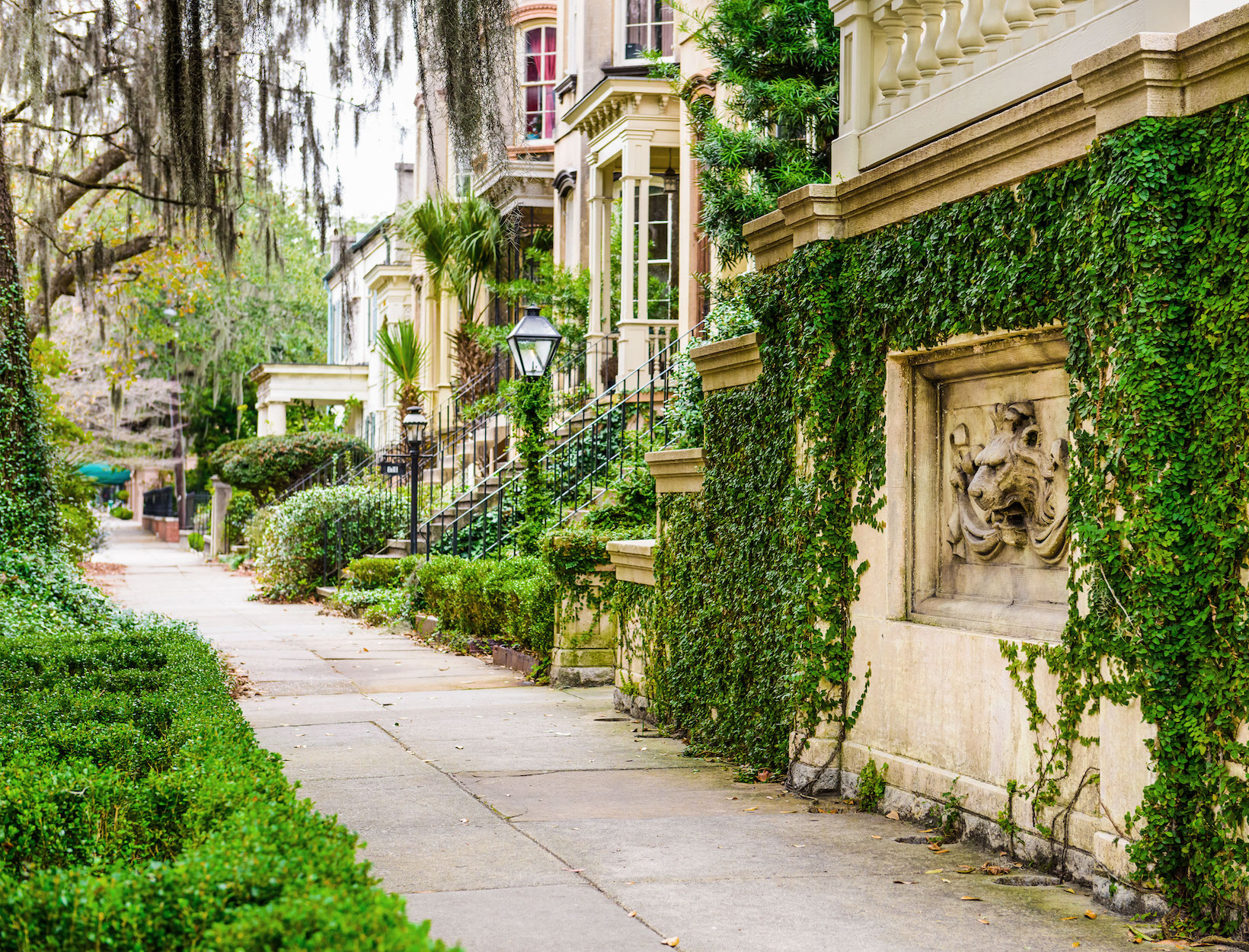
The visual impact is immediate. You will encounter Federal-style townhouses, Georgian brick homes, and ornate Victorian row houses, many featuring wrought-iron balconies and hidden courtyard gardens. The district is highly walkable, but the grid can be disorienting at first. Most streets are named after trees, while avenues run north-south. Stick to the main arteries like Broughton Street for shopping or Abercorn Street for dining to orient yourself.
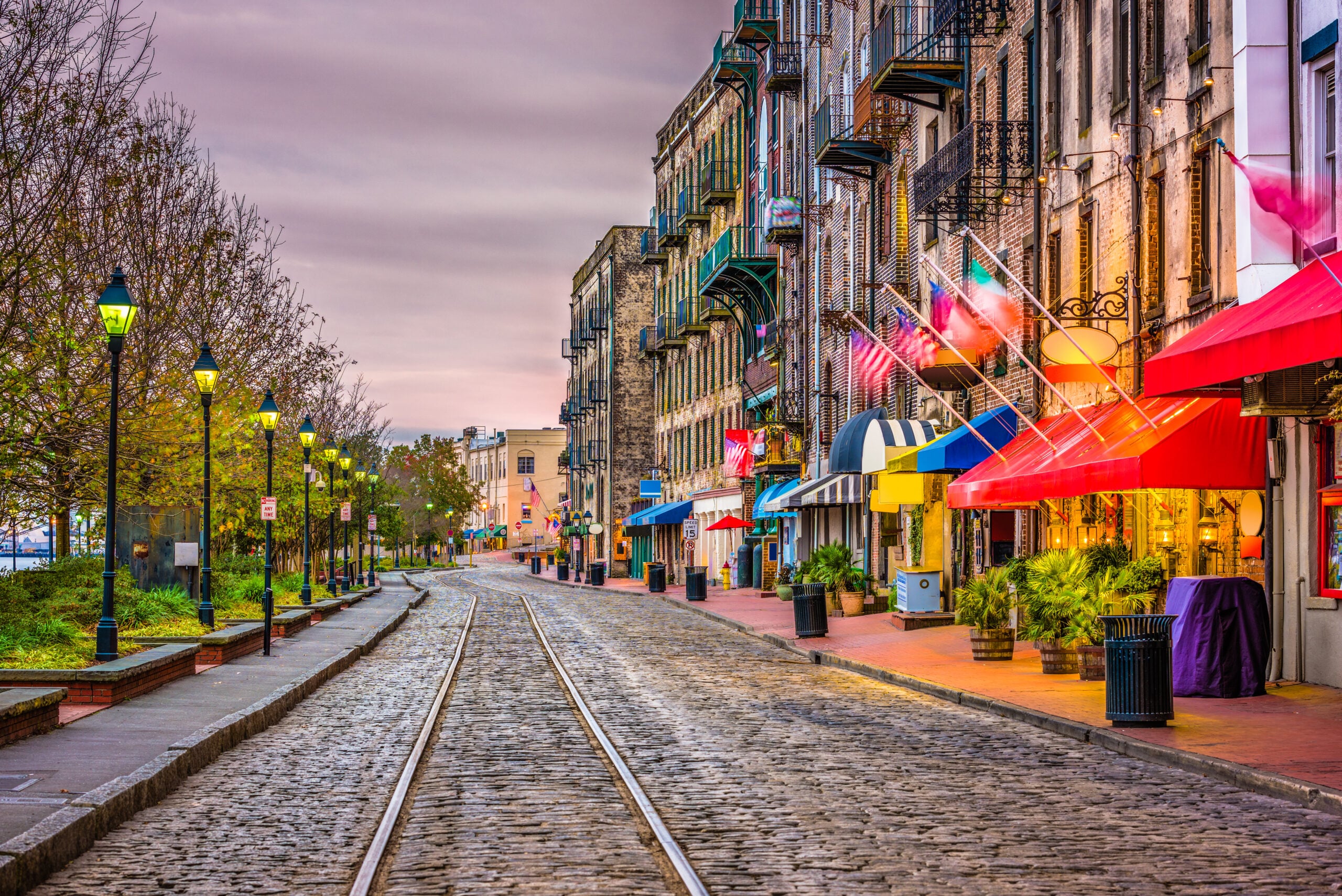
Start your exploration at Forsyth Park, the district’s largest green space, then work your way north toward River Street. This area offers a stark contrast, with cobblestone streets and former cotton warehouses now housing boutiques and restaurants. For a more residential feel, wander the squares between Bull Street and Martin Luther King Jr. Boulevard, where you’ll find quiet benches and some of the city’s most photographed homes.
Map of the Historic District
Best Savannah Restaurants to Try
Savannah’s dining scene balances historic charm with serious culinary ambition. You will find everything from upscale lowcountry feasts to quick bites near Forsyth Park. The city is famous for shrimp and grits, a dish that has become a staple at nearly every local table.
Planning your meals around the Historic District makes the most sense. Most top-rated spots are within walking distance of each other, allowing you to hop between neighborhoods without needing a car. Here is how the options break down by style and location.
Classic Lowcountry Comfort
Start with the essentials. Restaurants in the Historic District often serve the most authentic versions of shrimp and grits. Look for spots that use local river shrimp and stone-ground grits. These dishes are usually rich, creamy, and perfect for a long evening of walking.
Modern Southern Fusion
For a newer vibe, check out the restaurants near Forsyth Park. These venues often mix traditional Southern ingredients with modern techniques. The atmosphere is usually more casual, and the menus change with the seasons. It is a good place to try something unexpected alongside familiar favorites.
Quick Bites and Coffee
Not every meal needs to be a sit-down affair. Savannah has a thriving coffee culture and plenty of small shops for lunch. Grab a biscuit or a sandwich from a local bakery before heading to a museum or a park. These small stops are often where you will find the best local conversations.
Fine Dining Experiences
If you want a special night out, the Historic District offers several Michelin-recognized or highly rated fine dining options. Reservations are essential, especially on weekends. These restaurants often feature extensive wine lists and multi-course tasting menus that showcase the region's best produce.
| Restaurant Style | Price Range | Neighborhood | Best For |
|---|---|---|---|
| Classic Lowcountry | $$-$$$ | Historic District | Authentic shrimp and grits |
| Modern Fusion | $$$-$$$$ | Forsyth Park Area | Seasonal menus, date night |
| Quick Bites | $-$$ | Various | Lunch, coffee, casual snacks |
| Fine Dining | $$$$ | Historic District | Special occasions, wine |
Use this table to plan your route. Mix a casual lunch in one neighborhood with a dinner reservation in another to see different parts of the city.
Top Attractions and Gardens
Savannah’s aesthetic is defined by its layered history, visible in the shaded squares, stately Victorian homes, and moss-draped cemeteries that dot the Historic District. These sites offer a tangible connection to the city’s past, blending architectural grandeur with Southern Gothic atmosphere.
Forsyth Park
Forsyth Park is the crown jewel of Savannah’s green spaces, spanning 30 acres in the heart of the city. The park is anchored by its iconic 1858 fountain, a popular backdrop for visitors. Beyond the water feature, the park offers expansive lawns for picnics and shaded paths lined with live oaks. It serves as a perfect central hub for exploring the surrounding neighborhoods.
Bonaventure Cemetery
Located just south of the Historic District, Bonaventure Cemetery is a National Historic Landmark known for its haunting beauty. The grounds feature massive live oaks draped in Spanish moss, creating a cathedral-like canopy over the graves. It is the final resting place of author Flannery O’Connor, whose mausoleum is a frequent stop for literary pilgrims. The cemetery is open daily and free to visit, offering a quiet, reflective experience.
Historic District Homes
The Historic District itself is a living museum of architecture, featuring over 2,000 historic buildings. Walking tours reveal a mix of Georgian, Federal, and Greek Revival styles, with many homes dating back to the 19th century. Notable sites include the Owens-Thomas House, a rare Regency-style building, and the Mercer-Williams House, made famous by the book and film Midnight in the Garden of Good and Evil. These homes provide insight into the lives of Savannah’s early merchants and elites.
When to Visit Savannah
Choosing the right time to visit Savannah depends on how you balance weather, crowds, and your tolerance for humidity. The city’s charm is year-round, but the experience shifts dramatically with the seasons. Spring and fall offer the most comfortable conditions for exploring the Historic District’s cobblestone streets and squares, while summer brings intense heat and higher prices. Winter is mild but wet, offering a quieter, more local atmosphere.
Spring (March to May): The Sweet Spot
Spring is widely considered the best time to visit. The azaleas and dogwoods bloom in Forsyth Park and the city squares, creating a picturesque backdrop for walking tours. Temperatures are pleasant, typically ranging from 60°F to 75°F, making it ideal for outdoor dining on River Street or strolling through the Cathedral Square area. However, this is also peak tourist season. Book accommodations early, especially around Easter and the Savannah Music Festival in April. Expect crowds in the Historic District and higher prices for boutique hotels in the Starland District.
Summer (June to August): Heat and Festivals
Summer in Savannah is hot and humid, with temperatures often exceeding 90°F and high humidity levels. This can make daytime exploration of the Historic District exhausting. However, it’s a vibrant time for festivals. The Savannah Jazz Festival in June and the Arts Festival in September (late summer/early fall) draw large crowds. If you visit during summer, plan indoor activities like museum visits or evening boat tours on the Savannah River. Air-conditioned accommodations are essential, and you’ll find fewer crowds in the early mornings or late evenings.
Fall (September to November): Comfort and Color
Fall offers a second wind of pleasant weather. September can still be warm, but by October and November, temperatures cool to the 60s and 70s. The fall foliage adds beauty to the city’s parks, particularly in Forsyth Park and Bonaventure Cemetery. This is a great time for foodies, as the season aligns with harvest festivals and local farm-to-table events. Crowds thin out after the summer rush, making it easier to get reservations at popular restaurants like The Olde Pink House or Green Truck Pub.
Winter (December to February): Quiet and Festive
Winter is Savannah’s quietest season. Temperatures are mild, rarely dropping below freezing, but rain is common. The city transforms with holiday lights and decorations, especially in December. The Savannah Christmas Parade and the Festival of Lights on River Street are major draws. While some outdoor attractions may have reduced hours, the Historic District is beautiful for a leisurely walk. This is the best time for budget travelers and those who prefer a more relaxed, local pace. Book early for holiday events, as accommodations fill up quickly.
Plan your Savannah itinerary
Savannah is compact but dense with history, making a loose plan essential to avoid missing the best parts of the Historic District. Start by mapping out your base. Most first-time visitors stay within the 24-square-mile Historic District, where walkability is high. If you prefer quieter evenings, consider lodging in the Victorian District or near Forsyth Park. Book accommodations early; the area fills up quickly during festival season and spring bloom periods.
Transportation is straightforward. The free DASH trolley loops through the Historic District, Victorian District, and Forsyth Park, making it easy to hop between squares and museums without a car. For longer distances or trips to Bonaventure Cemetery, rideshares are reliable and affordable. Walking is the best way to experience the city’s shaded squares and Spanish moss-draped streets, so pack comfortable shoes.
Packing for Savannah requires preparation for humidity and sudden rain showers. Light, breathable fabrics are a must. Bring a compact umbrella or rain jacket, especially if visiting between June and September. Don’t forget sunscreen and a hat; the sun reflects brightly off the cobblestones in areas like River Street.
Group activities by neighborhood to minimize walking back and forth. Start mornings at Forsyth Park or the River Street docks, then move inland to the squares like Wright and Johnson. This flow reduces heat exposure and keeps your itinerary logical.
Popular spots like The Husk, Green Truck Pub, and The Olde Pink House fill weeks ahead. Reserve tables for dinner at least three days before your trip. For breakfast, many cafes in the Historic District operate on a first-come, first-served basis, so arrive early.
Savannah hosts frequent festivals, from the St. Patrick’s Day Parade to the Savannah Music Festival. Check the official Savannah Visitors Bureau calendar before finalizing your dates. Events can impact traffic and hotel prices, so adjust your plan accordingly.
Common Questions About Savannah
Savannah is generally safe for tourists, especially within the walkable Historic District and popular areas like Forsyth Park. Stick to well-lit streets at night, keep valuables out of sight, and use licensed ride-shares or taxis if you are traveling late. The city center is heavily patrolled, making it easy to explore on foot during daylight hours.
Costs vary by season. Summer brings high humidity and peak crowds, driving up hotel rates in the Historic District. Fall and spring offer milder weather and slightly better deals. Budget roughly $150–$250 per night for mid-range hotels near River Street or Bull Street, while budget motels on the outskirts can be found for under $100.
Getting around is straightforward. The Historic District is compact and best explored on foot. For longer distances, such as to Bonaventure Cemetery or the Savannah Botanical Gardens, use ride-shares or the free DOT shuttle system. Parking can be challenging in the center, so consider using park-and-ride lots on the edge of the district.
No comments yet. Be the first to share your thoughts!