

Plan the route
Savannah is designed as a grid of squares, making it easy to navigate on foot or by bike. To avoid backtracking, sequence your trip by starting in the historic core and expanding outward toward the riverfront and the coast. This prevents the common mistake of zig-zagging across the city, which can add miles of unnecessary walking in high humidity.


Stops worth prioritizing
Savannah is designed around a grid of squares, making it easy to overschedule your trip. To keep your Savannah travel guide 2026 itinerary manageable, distinguish between the core historic anchors and the peripheral sites that are better suited for a second visit.
For first-timers, the priority is the Historic District. The trade-off is usually between spending your time in the curated greenery of the squares or venturing toward the riverfront. While the riverfront offers the best shopping and dining, the squares provide the actual architectural soul of the city. If you only have 48 hours, prioritize Forsyth Park and the riverfront over the outlying cemeteries.
| Location | Experience | Priority |
|---|---|---|
| Forsyth Park | Iconic fountain and wide lawns | Must-see |
| River Street | Cobblestones and tourist shops | High |
| Bonaventure Cemetery | Quiet, gothic landscape | Optional |
| Tybee Island | Beach and lighthouse | Optional |
Top priority stops
-
Forsyth Park
The city's most famous green space, centered around a massive white fountain. Visit early to avoid the crowds and capture the best light for photos. -
The Historic District Squares
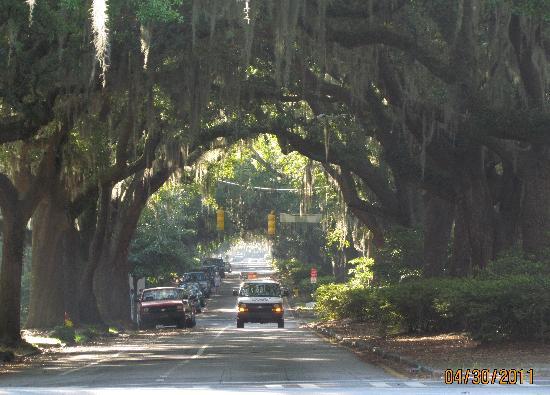
A walk through the 22 squares reveals the city's unique urban planning and Spanish moss. Focus on Chippewa Square (the 'Forrest Gump' square) for a mix of history and pop culture. -
River Street
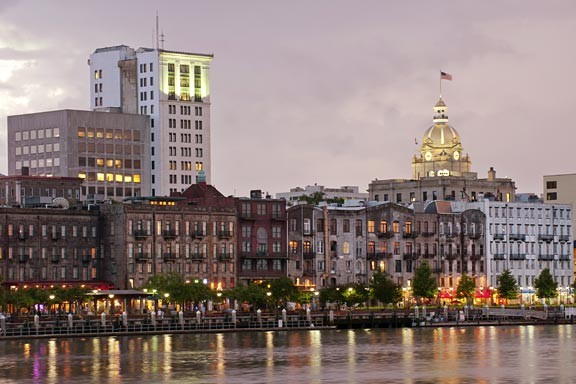
The waterfront hub for candy shops, boutiques, and views of the Savannah River. The lower level is better for shopping, while the upper level (Bay Street) is better for views. -
The Cathedral Basilica of St. John the Baptist
A stunning example of French Gothic architecture in the heart of the city. Check the mass schedule to ensure you can enter the sanctuary.
Timing and logistics
Visiting Savannah requires a strategy for the heat and the crowds. Spring (March to May) and autumn (October to November) offer the most comfortable weather for walking the squares. If you visit during the summer, expect high humidity and afternoon thunderstorms; plan your outdoor activities for early morning and retreat to air-conditioned museums or cafes by 2 PM. During the peak of summer, the "heat index" often makes midday walking physically draining.
Parking in the historic district is a common pain point. While some street parking exists, the city's parking meters are strictly enforced. Your best bet is to use the city-managed garages, such as the Bryan St. Garage, and walk or use a ride-share service to reach your destination. If you are staying at a hotel, confirm their parking fees upfront, as valet is often the only option in the city center and can cost $30–$50 per night.
For transit, the Dot (Downtown Area Transit) is a free shuttle service that loops through the main tourist areas. It is a reliable way to avoid traffic, though it can get crowded during peak festival weekends. For dining, reservations are no longer optional at popular spots like The Olde Pink House; book these several weeks in advance to avoid two-hour waits. If you cannot get a reservation, try the bar area for walk-ins, though the wait remains significant.
Most attractions in the historic district are walkable, but the cobblestone streets are unforgiving. Trade your heels or dress shoes for supportive walking shoes to avoid blisters while navigating the city's grid. If you are renting a bike, ensure it has a comfortable seat; the distance between the far reaches of the squares and Tybee Island is too great for a casual cruiser, so keep the bikes for downtown use only.
Practical considerations for your visit
When budgeting for a Savannah trip, account for the "tourist premium" in the historic core. Dining on River Street is generally more expensive and lower quality than the bistros found deeper in the residential squares. For a more authentic experience, seek out the local eateries near the SCAD (Savannah College of Art and Design) campus, where students and faculty frequent.
To maximize your budget, consider the "Savannah Host" passes or bundled museum tickets if you plan to visit more than three sites. Be mindful that many high-end boutiques on Broughton Street have strict return policies for tourists, and some historic house museums require a pre-booked time slot to manage capacity, meaning you cannot simply walk in during peak season.
Regarding accessibility, be aware that many of the historic homes and museums have narrow hallways and steep stairs. If you have mobility issues, stick to the main squares and the riverfront elevators, as some of the smaller boutiques and historic house museums are not fully ADA-compliant. For those visiting Bonaventure Cemetery, the paths are generally flat, but the distance is significant; a golf cart rental or a guided tour is recommended over walking the entire grounds. If you are using a wheelchair, avoid the lower cobblestone sections of River Street entirely, as the gaps between stones are wide and hazardous; stick to the paved upper level of Bay Street for the same views.
No comments yet. Be the first to share your thoughts!