
Start at the Historic District
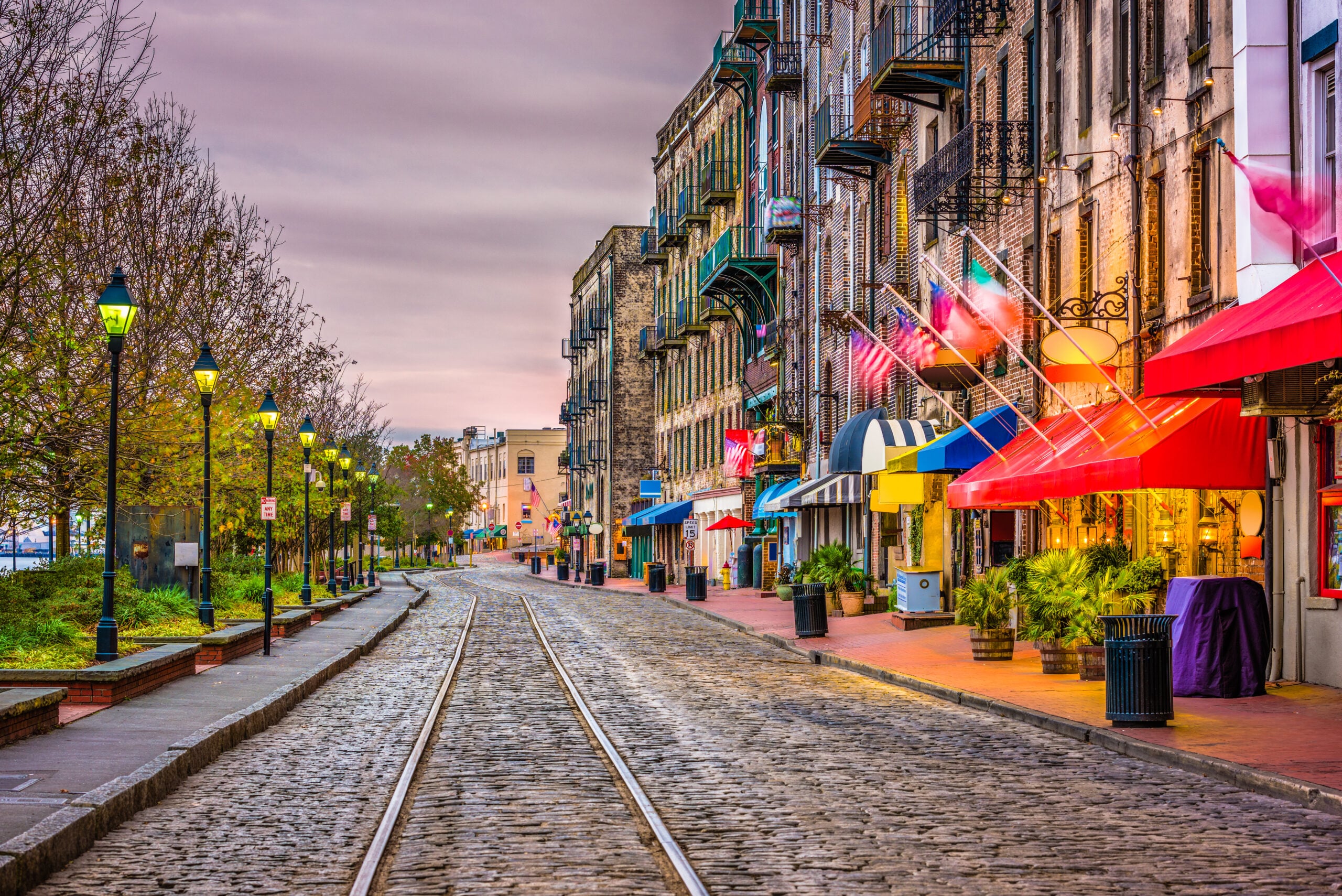
Savannah’s identity is built on a grid. The Historic District covers roughly 2.5 square miles, defined by 22 public squares that serve as the city’s living rooms. This layout isn’t just aesthetic; it creates a walkable environment where historic architecture, Spanish moss-draped oaks, and cobblestone streets blend into a distinct Southern atmosphere. Walking here feels different than in other cities because the scale is human, and the history is embedded in the pavement.
The area is often called the "Hostess City" not just for its hospitality, but for its deliberate design aimed at welcoming visitors. You’ll find Victorian homes, Georgian architecture, and antebellum mansions lining the streets. The squares, such as Chippewa, Johnson, and Monterey, each have their own character, often featuring monuments or gardens that provide shade and quiet amidst the tourism.
Start your visit by grounding yourself in the central landmarks. City Market offers a mix of shops and dining, while River Street connects the historic district to the waterfront, offering views of the Savannah River. From here, you can easily access the best tours, including bike and trolley options, to see more of the grid without tiring out.
To help you navigate this compact but dense area, use the map below to locate the squares and key points of interest. It’s the best way to plan a route that minimizes backtracking and maximizes your time exploring the architecture and history.

Walk the Historic Squares
Savannah’s grid is built around 22 parks that serve as the city’s living rooms. Each square is anchored by a towering live oak draped in Spanish moss, creating a canopy that filters the Georgia heat. Walking between them feels less like commuting and more like stepping into a series of curated gardens, where the air smells of earth and blooming jasmine.
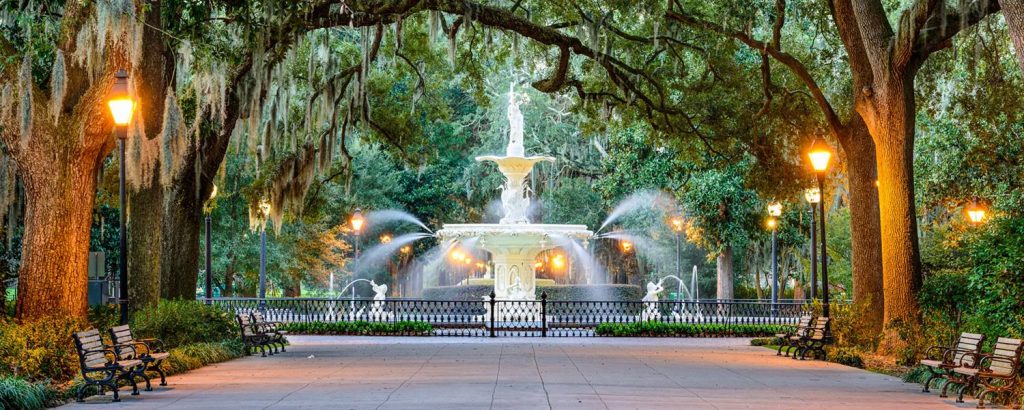
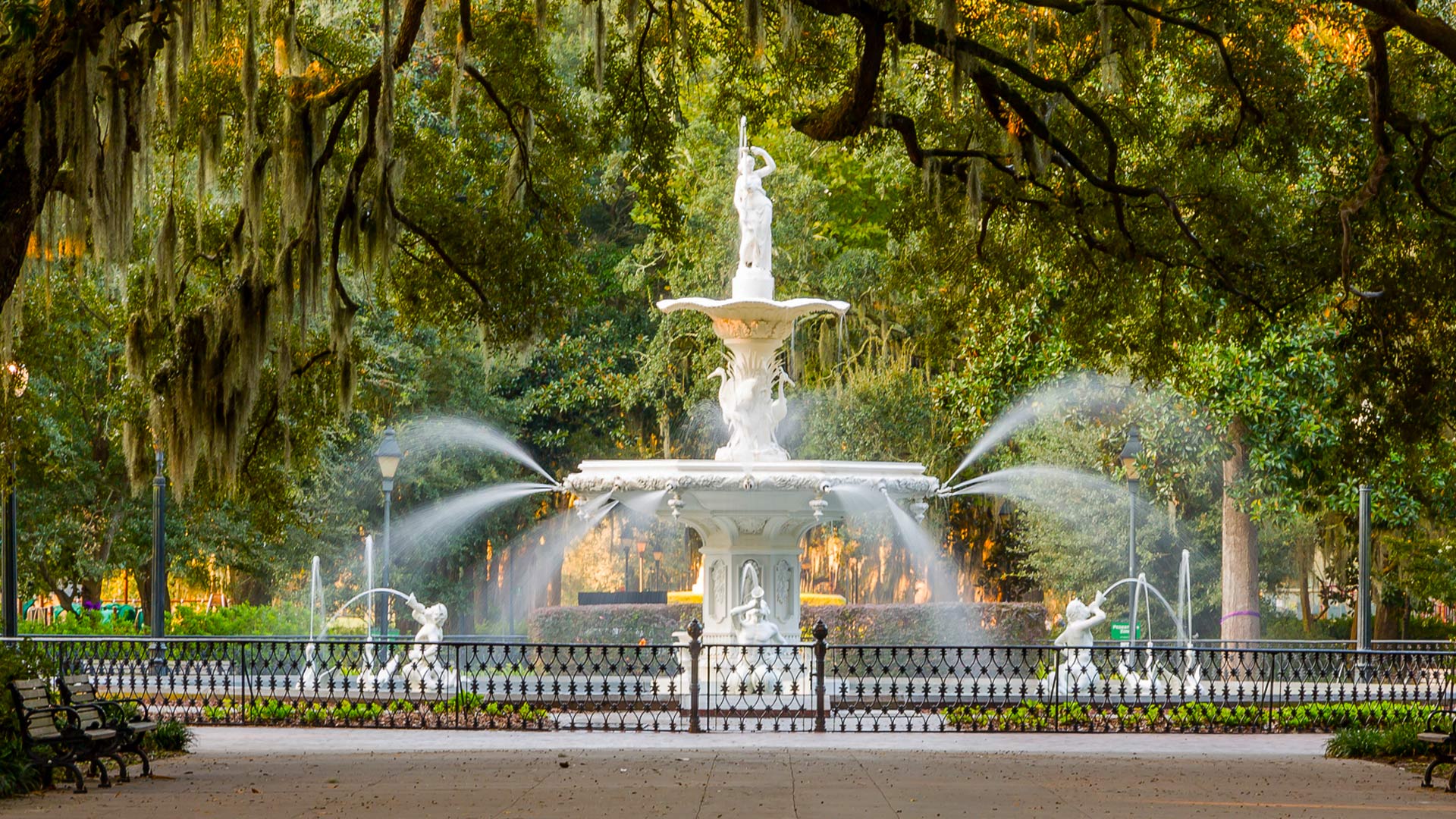
Forsyth Park is the crown jewel of this system. Its 30-acre expanse features a Victorian-era fountain that serves as a popular backdrop for photos and a wide lawn perfect for picnics. Located just west of the downtown core, it offers a spacious escape from the cobblestone streets of the historic district. The park also houses the Forsyth Park Visitor Center, making it a practical starting point for your exploration.
For a more intimate experience, walk toward Chippewa Square. This spot gained global fame as the setting for the movie Forrest Gump, where the character sits on a bench waiting for a bus. The square is smaller than Forsyth but equally photogenic, with the General Charles Scott Greene monument standing as a central focal point. It is a short walk from River Street, allowing you to combine history with riverfront views.
Other squares like Johnson and Wright offer quieter corners to rest your feet. Johnson Square is home to the Owens-Thomas House, providing historical context to the greenery. Wright Square features a statue of General Nathanael Greene and is often used for local art exhibits. These smaller parks are perfect for breaking up your day, offering shade and a moment of calm before heading back toward the bustling city center.
Visit Tybee Island for beach time
Savannah Travel works best as a clear sequence: define the constraint, compare the realistic options, test the tradeoff, and choose the path with the fewest hidden costs. That order keeps the advice usable instead of decorative. After each step, pause long enough to check whether the recommendation still fits the reader's actual situation. If it depends on perfect timing, unusual access, or a best-case budget, include a simpler fallback.
The simplest way to use this section is to write down the real constraint first, compare each option against it, and choose the path that still works outside ideal conditions.
Compare accommodation options
Savannah Travel works best as a clear sequence: define the constraint, compare the realistic options, test the tradeoff, and choose the path with the fewest hidden costs. That order keeps the advice usable instead of decorative. After each step, pause long enough to check whether the recommendation still fits the reader's actual situation. If it depends on perfect timing, unusual access, or a best-case budget, include a simpler fallback.
| Factor | What to check | Why it matters |
|---|---|---|
| Fit | Match the option to the primary use case. | A good deal still fails if it does not fit the job. |
| Condition | Verify age, wear, and service history. | Hidden condition issues erase upfront savings. |
| Cost | Compare purchase price with likely upkeep. | The cheapest option is not always the lowest-cost option. |
When to Visit and What to Spend
Savannah’s charm lies in its Spanish moss-draped oaks and cobblestone squares, but the right timing makes all the difference. Spring (March to May) offers the most pleasant weather for walking the historic district, though it is also the peak season. If you prefer fewer crowds and lower rates, consider late fall or early spring. Summer brings intense heat and humidity, while winter is mild but can be chilly for those not used to Southern dampness.
Budgeting for a Savannah trip depends heavily on your accommodation choices. Historic district hotels command premium prices, especially near Forsyth Park. For a more affordable stay, look into boutique inns in the Victorian District or modern hotels near the airport, which are just a short drive from the squares. Dining costs vary widely; you can enjoy excellent Southern cuisine at local spots for under $20 per person, while upscale restaurants in historic mansions will cost significantly more.
Transportation is another key factor. The walkable historic district is best explored on foot or by bike. Trolley tours are popular but add up quickly. If you plan to visit nearby Tybee Beach, budget for parking fees or ride-share costs. Overall, a three-day trip for two people might cost between $800 and $1,500, depending on your comfort level and dining preferences.
To help you organize your itinerary, here are the essential steps to finalize your Savannah plans:
Frequently asked: what to check next
Savannah trip checklist
Savannah Travel works best as a clear sequence: define the constraint, compare the realistic options, test the tradeoff, and choose the path with the fewest hidden costs. That order keeps the advice usable instead of decorative. After each step, pause long enough to check whether the recommendation still fits the reader's actual situation. If it depends on perfect timing, unusual access, or a best-case budget, include a simpler fallback.
No comments yet. Be the first to share your thoughts!